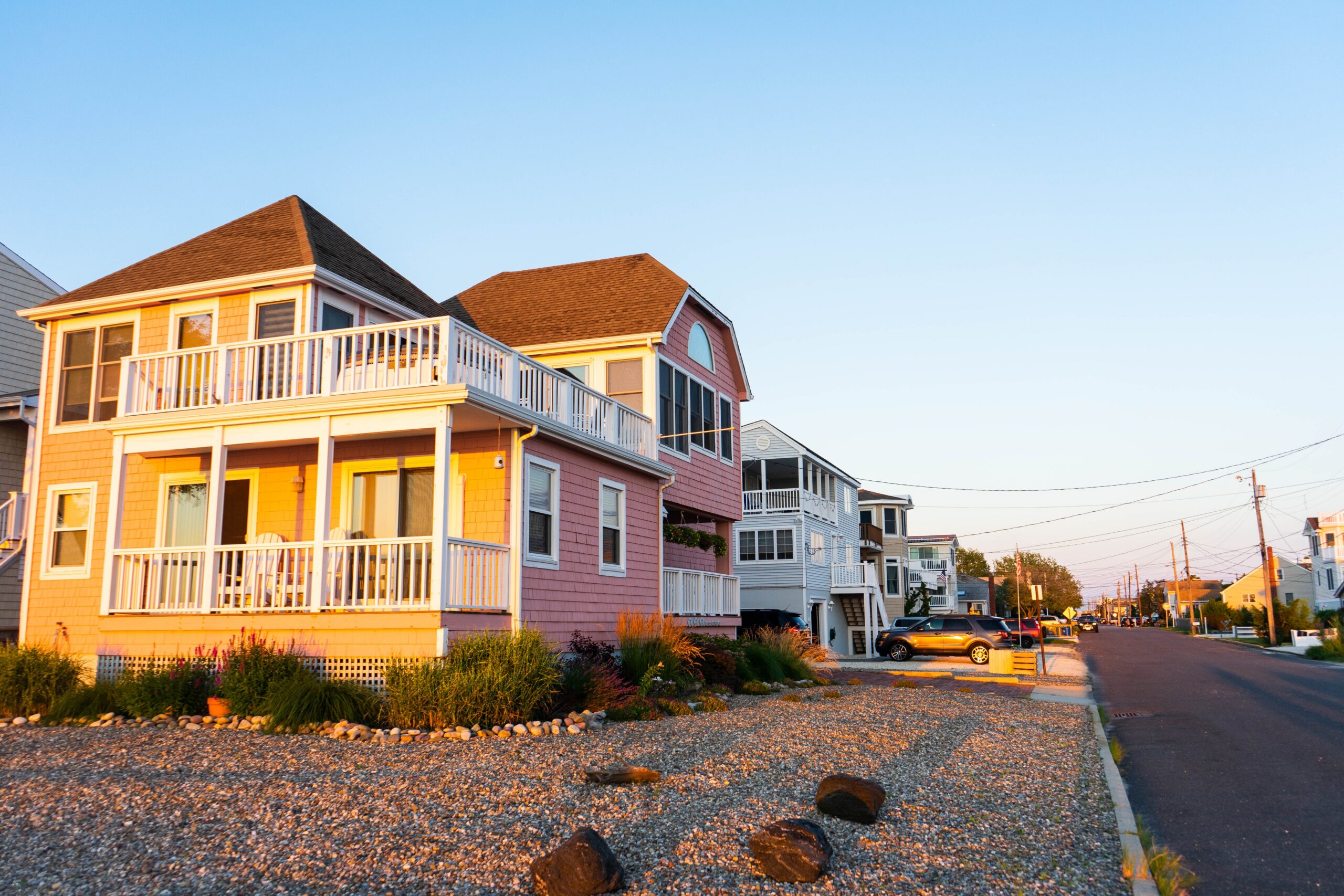
If you’ve been watching Delaware home prices climb toward $400,000, it’s natural to wonder whether you’ve already priced yourself out. As a Senior Real Estate Specialist who works with Maryland retirees moving to Delaware every day, I can tell you the headline number isn’t the one that matters. Figuring out how much house you can afford in Delaware comes down to your income, your debt, your credit score, and your down payment, not a market average that has nothing to do with your finances.
Why Delaware’s Median Home Price Isn’t Your Number
What Delaware Homes Are Selling For Right Now
Delaware’s median home sale price hit $398,585 in April 2026, up 2.6% year over year, according to Redfin. Since Redfin is a real estate brokerage, I’m using that figure only as a market snapshot, not as a starting point for your budget. Federal housing data confirms the same trend: prices have been climbing steadily across the state, not just spiking in one quarter.
Why This Number Doesn’t Tell You What You Can Afford
A median price describes the whole market. It gets pulled up by luxury coastal listings in Lewes and Rehoboth Beach, and pulled down by smaller inland homes near Millsboro. Your budget doesn’t average with anyone else’s. It’s built from your own income, your own debt, and your own down payment, and that’s the number worth knowing before you start touring homes.
How Debt-to-Income Ratio Sets Your Real Budget
What Counts as Debt When Lenders Calculate DTI
Your debt-to-income ratio, or DTI, compares your monthly debt payments to your gross monthly income, and it’s the single biggest factor lenders use to decide what you qualify for. The Consumer Financial Protection Bureau counts your future mortgage payment alongside car loans, student loans, credit card minimums, and any other recurring debt. It does not count groceries, utilities, or everyday spending. That distinction matters, because it means your DTI can look tighter or looser than your day-to-day budget feels.
Applying the 28/36 Rule to a Delaware Paycheck
Most lenders use a version of the 28/36 rule as a starting guideline:
- No more than 28% of your gross monthly income should go toward housing costs
- No more than 36% should go toward total debt, housing included
Delaware’s median household income sits at $82,855 a year, according to Census Bureau data. That works out to roughly $6,905 a month before taxes. Run that through the 28/36 rule and you land near $1,933 a month for housing, with room for about $2,486 a month in total debt payments. Your own numbers will move up or down from there depending on your income and what you’re already paying toward other debt.
Credit Score and Down Payment Shift the Math Too
How Your Credit Score Changes What You Qualify For
Your credit score doesn’t just affect whether you get approved. It shapes your interest rate, and a lower rate stretches your buying power further without changing your income at all. Delaware’s state assistance programs set 620 as the minimum credit score for eligibility, and most conventional lenders use that same number as a practical floor. Moving from the low 600s into the 760+ range typically lowers a monthly mortgage payment by somewhere between $150 and $250, depending on loan size, and can save tens of thousands of dollars over the life of the loan. You don’t need a perfect score to buy in Delaware, but closing even a modest gap before you apply can meaningfully change what fits your budget.
Why a Bigger Down Payment Isn’t Always the Right Move
A larger down payment lowers your monthly payment and can help you avoid private mortgage insurance, but it isn’t automatically the smartest move for every retiree relocating from Maryland. If putting more down means draining savings you’ll want for moving costs, home updates, or simply peace of mind in a new state, a smaller down payment paired with assistance can be the stronger choice. This is exactly the kind of decision worth talking through with someone who knows both sides of the move.
What This Looks Like With Real Delaware Numbers
A Sample Budget Using Delaware’s Median Income
Take that same $82,855 median household income, or roughly $6,905 a month. The 28% rule alone caps housing at $1,933 a month. But that number changes once other debt enters the picture, and this is where two buyers with identical incomes end up with genuinely different budgets.
A buyer with no other monthly debt stays capped by the 28% housing rule alone, at $1,933 a month. A buyer carrying an average new-vehicle payment, which reached $770 a month in early 2026 according to Experian, hits the 36% total-debt ceiling first: $2,486 minus that $770 leaves $1,716 a month for housing. Same income, same interest rate, a $217 monthly gap in what each buyer actually qualifies for. That’s the DTI math working in real time, and it’s exactly why your own debt picture matters as much as your paycheck.
How Down Payment Assistance Changes the Range
The Delaware State Housing Authority offers several down payment assistance options that can shift this picture further, especially for buyers relocating from out of state. Current programs include:
- Smart Start
- First State Home Loan, offering 3% in assistance
- Keys4You, offering 4% in assistance
- Take5, offering 5% in assistance
Eligibility depends on county income limits and purchase price caps, and the 620 minimum credit score applies here too. These programs don’t replace the DTI math above, but they can lower the upfront cash you need, which changes how much of your savings stays untouched for the rest of your move. If you want to go one step further, I’ve also broken down Delaware’s first-time buyer programs most buyers miss in more detail.
Getting Your Real Number
The median price you’ve been seeing in headlines was never going to be your number, and now you know why. Your real budget comes from your income, your debt, your credit score, and how you want to use your down payment, run together instead of guessed at separately. Once you have that number, it’s worth looking at what Delaware closing costs typically run for Maryland buyers too, since that’s the other piece of the picture. If you’d like to walk through what all of this looks like with your own figures, reach out anytime. I’m here to help you find the number that’s actually yours, and the home that fits it.